

 ENGLISH
 中文
中文 हिन्दी
 ไทย
ไทย 한국어
한국어 FRANÇAIS
 РУССКИЙ
 PORTUGUÊS
 العربية
 TIẾNG VIỆT
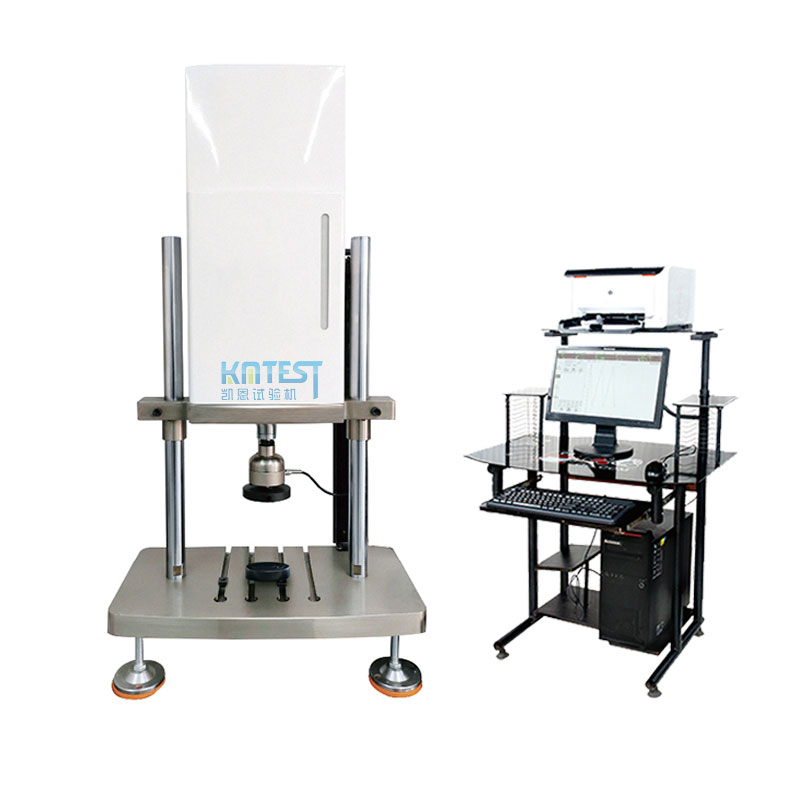
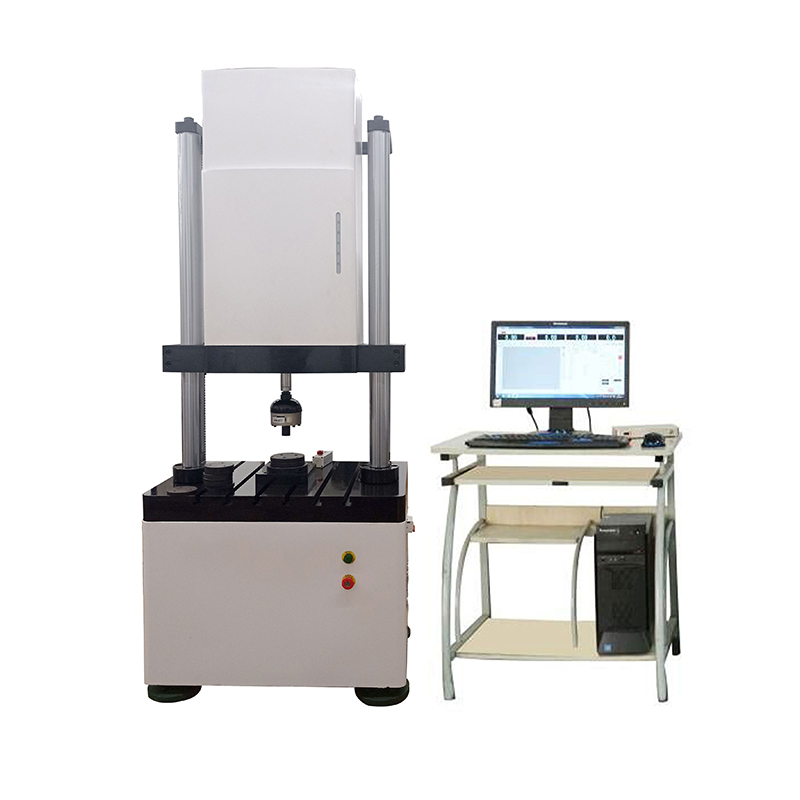
The Kaien Interbody Fusion Cage Mechanical Testing Machine is a mechanical testing system designed to evaluate the mechanical properties of interbody fusion cages, including torque, bending, stiffness, strength, and fatigue performance, to determine their reliability and safety in clinical applications.
As a medical implant that is placed into the human body and bears complex physiological loads over the long term, interbody fusion cages must undergo rigorous mechanical performance testing before market approval. According to domestic and international standards such as ASTM F2077 and YY/T 0959, the core tests are divided into two main categories: static and dynamic. The specific test items are as follows
1. Axial Compression Test
Simulates the body weight and compressive load borne by the spine in an upright position.
Test Purpose: To evaluate the compressive strength, stiffness, and stability of the cage under vertical pressure, verifying whether it will be crushed or collapse in vivo.
Test Method: Apply axial compressive load to the cage through a platen; record yield load and ultimate load.
Key Indicators: Stiffness, yield load, ultimate load.
2. Compression-Shear Test
Simulates the oblique shear force exerted on the cage when the body bends or twists.
Test Purpose: To evaluate the cage's ability to resist sliding and shear failure.
Test Method: Typically load the specimen at a 45∘ or 27∘ angle relative to the loading axis.
3. Torsion Test
Simulates the torque applied to the cage during body rotation.
Test Purpose: To evaluate the strength and stiffness of the cage under torsional load.
Test Method: Under a specified axial preload (e.g., 100 N for cervical spine, 500 N for lumbar spine), apply cyclic torque until failure.
4. Dynamic Fatigue Test
This is one of the most critical tests, used to verify the long-term durability of the implant.
Test Purpose: To determine the fatigue life of the cage under long-term cyclic loading (e.g., walking, bending).
Test Method:
Loading: Typically apply sinusoidal loading at a frequency of 0.1 Hz∼5 Hz (in vivo environment is usually ≤ 1 Hz).
Cycle Count: Unless otherwise specified, typically must withstand 5 million cycles without fatigue failure.
Environment: To simulate physiological conditions, testing is often conducted in physiological saline (Ringer's solution) at 37∘C.
5. Subsidence Test
Based on ASTM F2267.
Test Purpose: To evaluate whether the cage will subside (sink) into the vertebral body.
Test Method: Place the cage between simulated vertebral body materials (e.g., polyurethane blocks), apply compressive load, and measure the subsidence depth.
6. Push-Out and Migration Test
Test Purpose: To evaluate the initial stability of the implant in vivo and prevent postoperative displacement.
7. Elastic Recovery Test
For non-metallic or specially structured cages.
Test Purpose: To evaluate the cage's recovery capability after deformation and calculate the elastic recovery ratio.
8. Dynamic Torsional Fatigue Test
Test Purpose: To evaluate durability under cyclic torsional loading. Typically loaded with a stress ratio of R=−1 (fully reversed cycle) at frequencies up to 10 Hz, with a target of withstanding 5 million cycles.